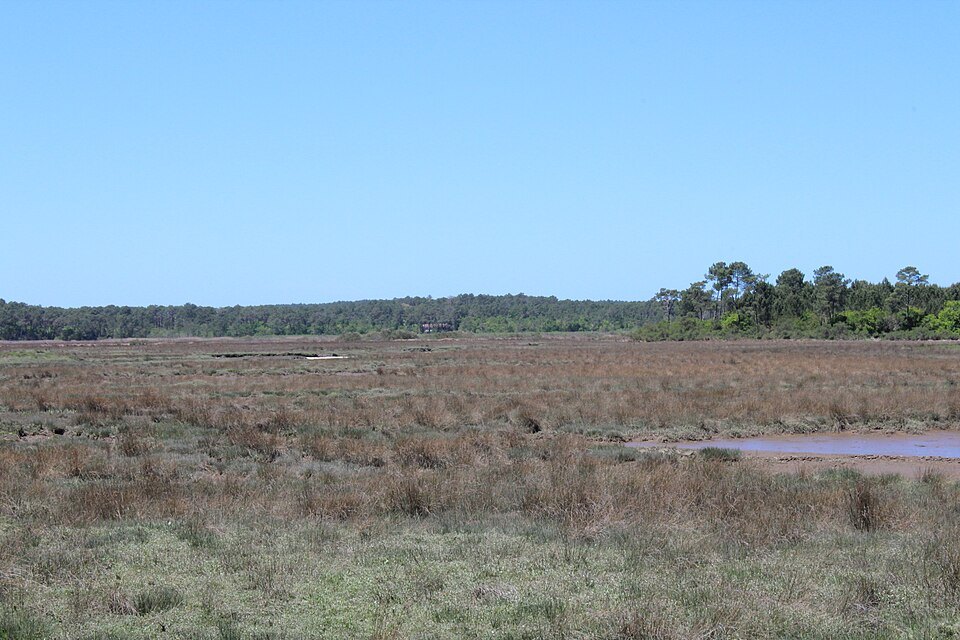
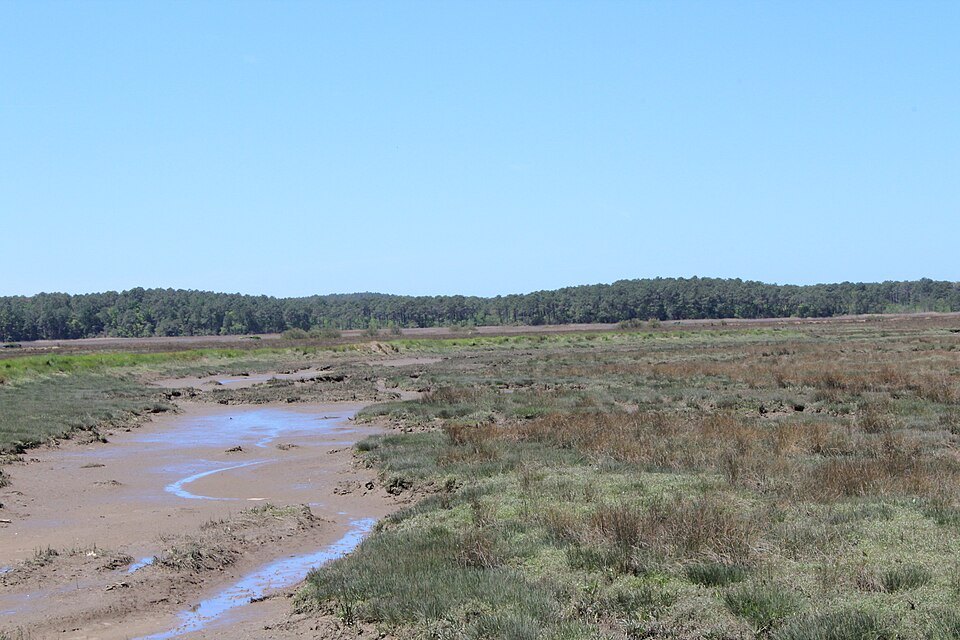
The salt meadows of Arès-Lège
A living foreshore of creeks and salt tolerant plants.
On the northern shore, salt meadows form a wetland shaped by tides, creeks and salt-tolerant plants. Low grasses hold sediment and provide food and shelter for wildlife.
Stay on marked paths, leave plants undisturbed and keep clear of birds. Mudflats can flood quickly: check tide times and access points.
Plants adapted to salt
Salt-meadow plants tolerate changing salinity and periodic immersion. Their low cover is valuable: it holds soil, supports small organisms and shapes bird habitat. At low tide, creeks and mudflats become visible; at high tide, water redraws the wetland’s edges.
Staying on the paths
The nature reserve protects these habitats and their wildlife. Use marked trails and viewing points. Do not pick plants, cross seagrass or approach birds. Check access and tide times on the day.
Notice the small transitions
The salt meadows are a mosaic of conditions rather than a uniform field. A slight change in height can affect how often water reaches the ground; that in turn influences which plants thrive. The creeks carry water through the site, while the plants slow sediment and create shelter for small organisms and birds. Looking closely at these transitions offers a quieter kind of wildlife watching than searching only for large or distant species.
Bring binoculars if you have them, but keep your attention on the ground and the path too. Wetland edges can be soft, and stepping off a trail may damage plants that take time to recover. Check tide and access information before travelling, then stay within the areas currently open to visitors.
A quieter kind of discovery
The reserve can feel understated at first, especially compared with the dune or the open beach. Its character emerges through repeated details: a creek bending through the grass, a change in ground level, a bird lifting from the marsh. Give your eyes a moment to adjust and the landscape becomes more intricate. The plants are not background decoration; they are part of the structure that holds the wetland together.
This is a good place to bring patience rather than a packed itinerary. Walk a short section slowly, pause at an authorised viewpoint and let changing light reveal the texture of the marsh. Avoid collecting shells or plants, and leave room for wildlife to move away. Check local access guidance before your trip, as paths and conditions can vary.
Official visitor information and planning: visit the official website.