The Dune of Pilat, a landscape in motion
A shifting boundary between forest, sand and ocean.
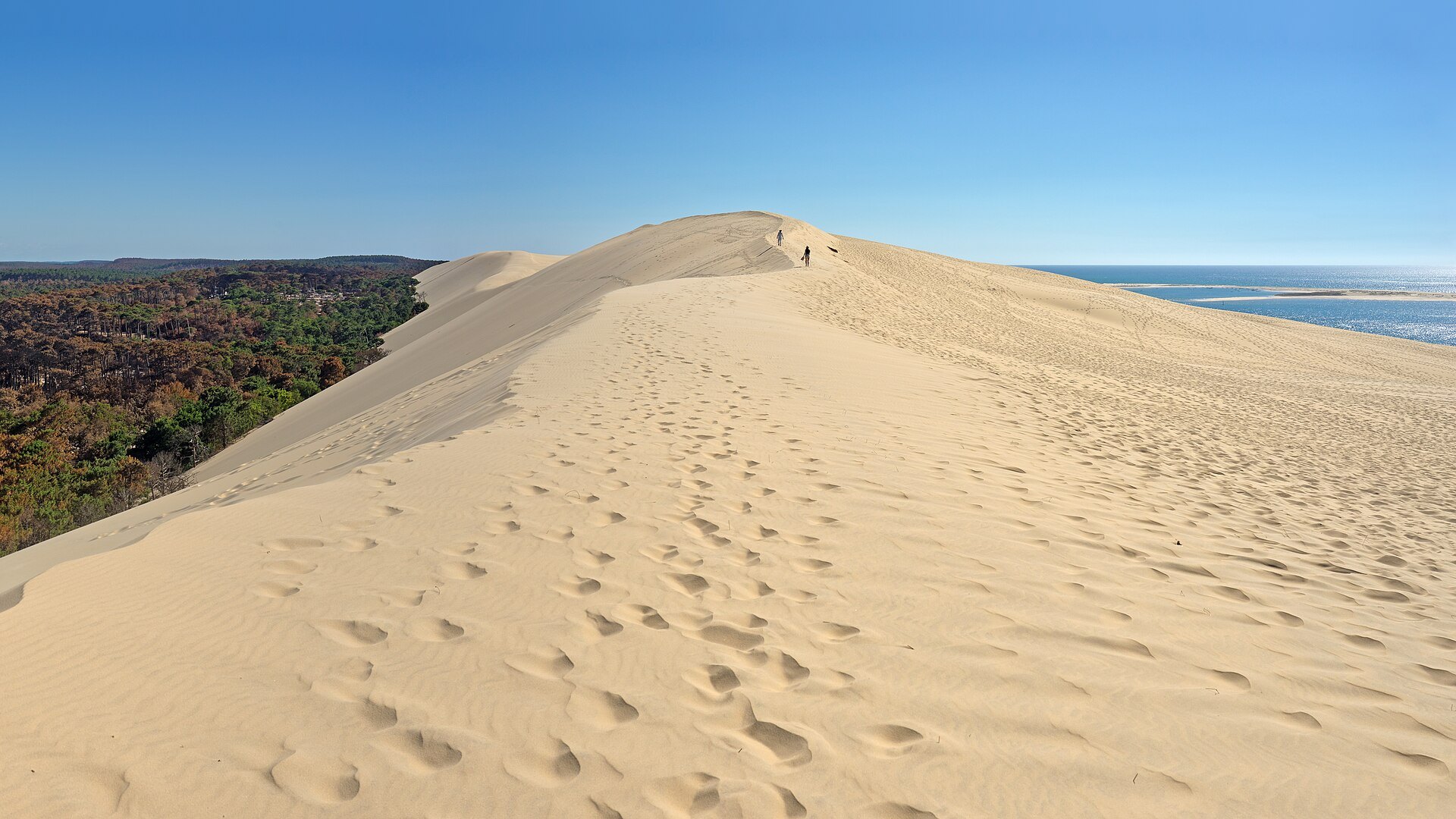
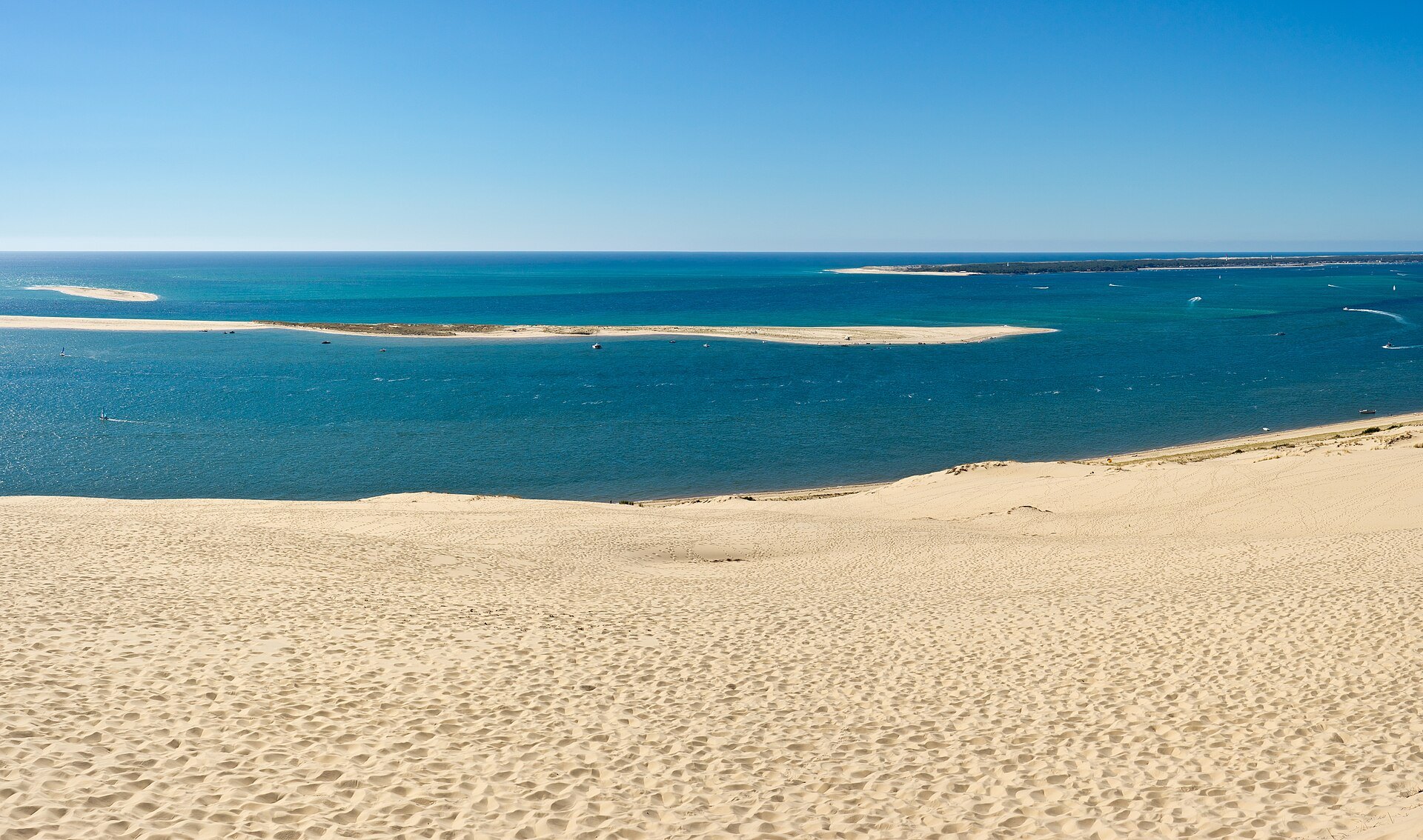
The dune runs between the Landes forest and the Atlantic. Wind shifts the sand and redraws its slopes; from the ridge, look over forest, the Arguin sandbank and ocean passes.
This is a fragile environment: stay on open routes, leave sand and plants where they are, and carry litter out. Check official visitor information before setting off.
Reading the dune
The climb offers several viewpoints along the way. Notice the shape of the slopes and the plants that hold the sand: they help explain why the dune is never quite the same. At the top, distinguish the forest, the bay and the open coast—three landscapes in one view.
Planning a visit
Walking on sand is more demanding than a flat path. Bring water, protect yourself from the sun and adapt your route to the weather. Facilities, access and site conditions can change, so check the Grand Site’s visitor guidance before setting out.
A view made of contrasts
From the ridge, the landscape reads in broad bands: forest behind you, the bay and sandbank beyond, then the open Atlantic. Turn slowly and each direction gives the dune a different scale. From below it can feel like a wall of sand; from above, its long curve joins forest and water into one view. The wind is part of that experience, constantly changing the surface and softening footprints.
Give yourself time for the climb and for pauses on the way. Sand underfoot makes even a familiar distance feel different, and exposed sections can be tiring in strong sun or wind. Choose a pace that leaves room to look around, stay on the routes open to visitors and take everything you brought back down with you.
Come prepared to spend time outside
The dune is an exposed place, and conditions can feel different once you leave the shelter of the forest. Water, sun protection and comfortable footwear make the climb more pleasant; a light layer can help when the wind rises. If you are visiting with others, choose a meeting point and a pace everyone can manage. Take breaks where permitted and give people space on narrow or busy sections.
The view is not the only reason to slow down. Notice how the forest meets the moving sand and how plants persist in a demanding environment. Stay on open routes, do not remove natural material and carry out any rubbish. A little preparation leaves more time for the landscape and less for solving avoidable problems on the way.
Official visitor information and planning: visit the official website.