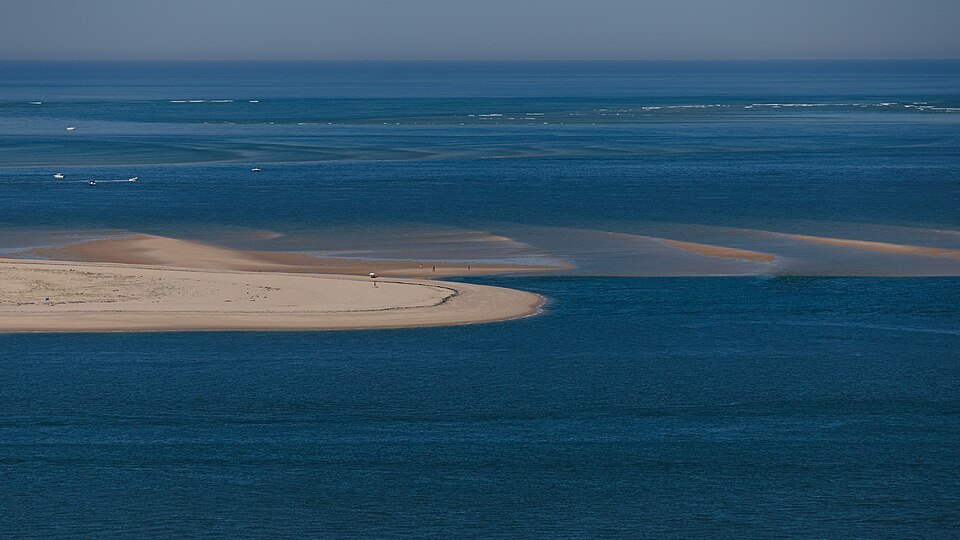
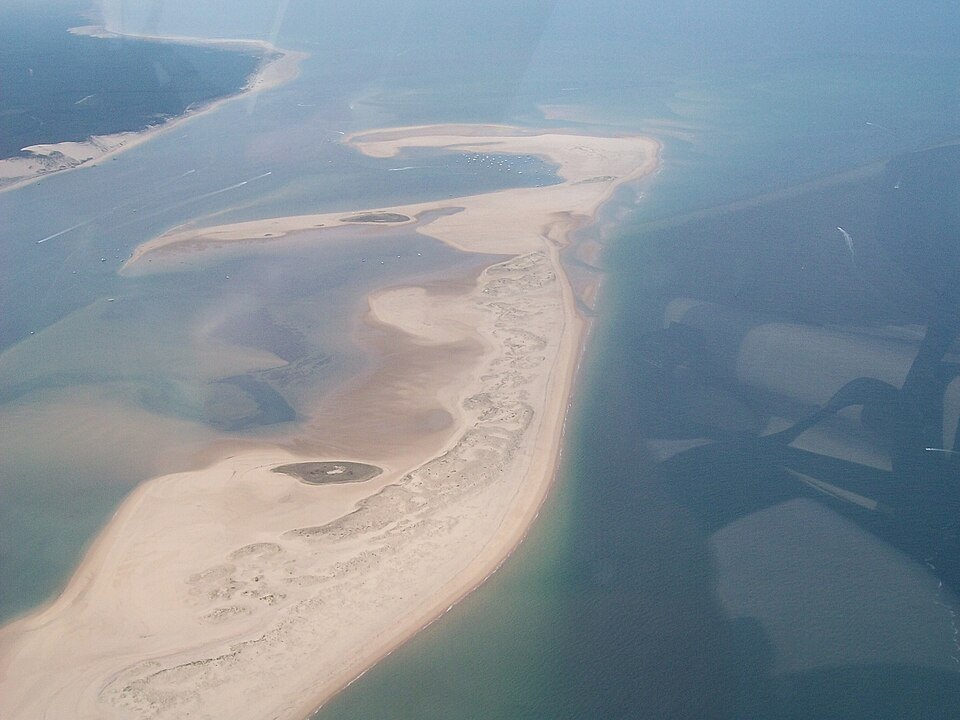
The Arguin Sandbank, an island on the move
A living sandbank between ocean, passes and birds.
At the bay’s entrance, this broad sandbank is reshaped by currents and wind. It shelters important habitats and provides resting places for many birds, including migrants.
Access rules differ across protected areas. Follow boundaries, keep clear of birds and leave no trace. Check current guidance before setting out.
One sandbank, many habitats
The sandbank is not a fixed beach. Currents shift its edges, while seagrass, upper shore and wet areas offer different conditions for wildlife. Birds rest and feed here; some periods are especially sensitive, which is why protected zones matter.
Choosing a responsible trip
Tides determine where visitors can approach. Before departure, ask which areas are accessible. Keep well away from birds and take all litter home. Do not attempt to cross on foot: channels and currents make the area hazardous.
A coastline in motion
The most useful way to look at Arguin is as a changing system rather than a single landmark. Wind pushes dry sand into new shapes; water cuts channels and redraws the edge of the bank. From a boat, notice how the colour and texture of the water shift over shallows and deeper passes. The sandbank’s outline in a photograph is only a moment in a much longer process.
A visit is also a chance to notice what is easy to overlook: birds feeding at the waterline, plants holding sand in place and the quiet gaps between groups. Binoculars help you watch from farther away. A guide can explain which parts of the landscape are visible on that day and why some areas need extra space.
Leave room for what you cannot see
Protected landscapes are often most interesting at a distance. A line of birds can look like a detail in the view, but it may be a resting group that needs a quiet margin around it. The same is true of the sandbank itself: its exposed surface is only one part of a habitat connected to the water beneath it. A responsible visit accepts that some places are best viewed from a boat or left entirely alone.
Before travelling, check the current access information and ask your operator how the route responds to changing conditions. Bring water, sun protection and a bag for anything you carry in. Small preparations make it easier to focus on the scenery and help keep a fragile place welcoming for the wildlife that depends on it.
Official visitor information and planning: visit the official website.